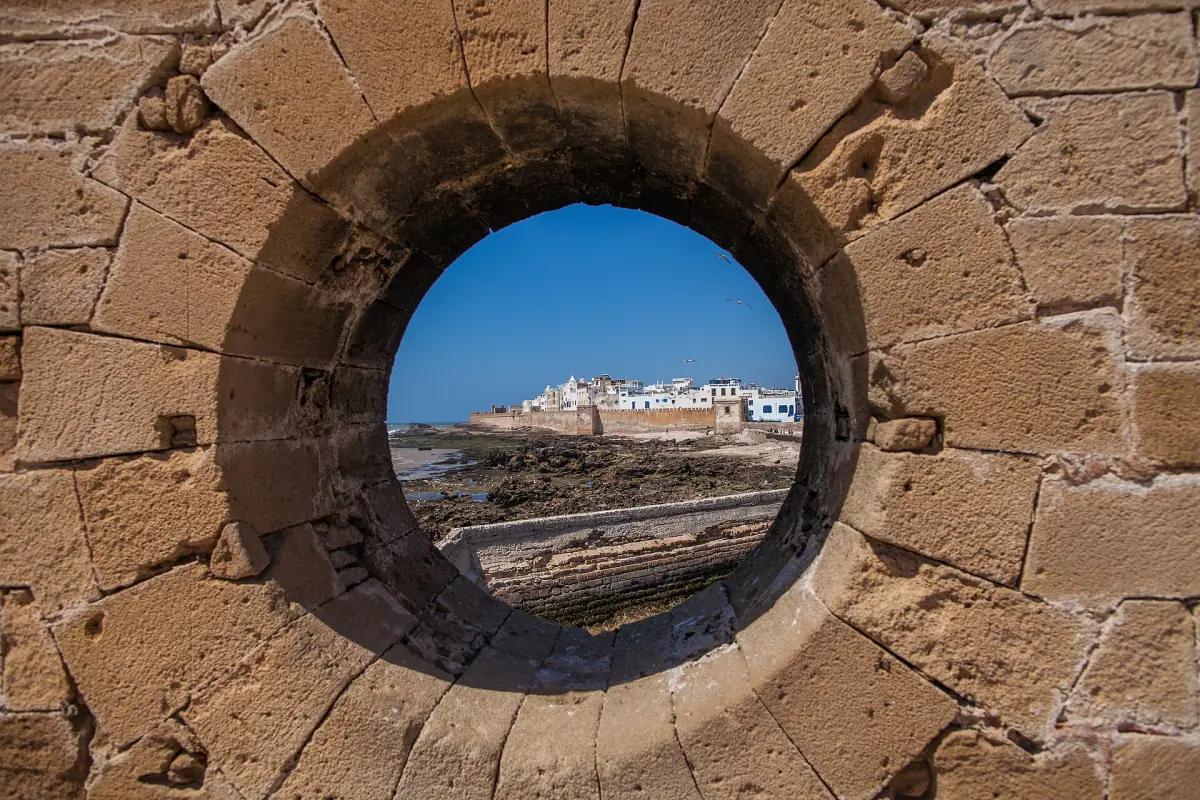
The medina of Essaouira in brief
The medina of Essaouira, formerly Mogador, has been on the UNESCO World Heritage List since 2001, under criteria (ii) and (iv). UNESCO describes a fortified port town of the 18th century and credits Sultan Sidi Mohamed Ben Abdallah with starting the planned town. It joins European military architecture to North African town planning, and it served as a multicultural trading center between Morocco, sub-Saharan Africa and Europe.
The World Heritage listing covers the historic ensemble of the town. It is not a certificate for individual shops, riads or guides. You can walk the lanes without a ticket. The Skala du Port at the harbor is a ticketed monument. This guide is independent and has no link to the city or to tourism authorities.
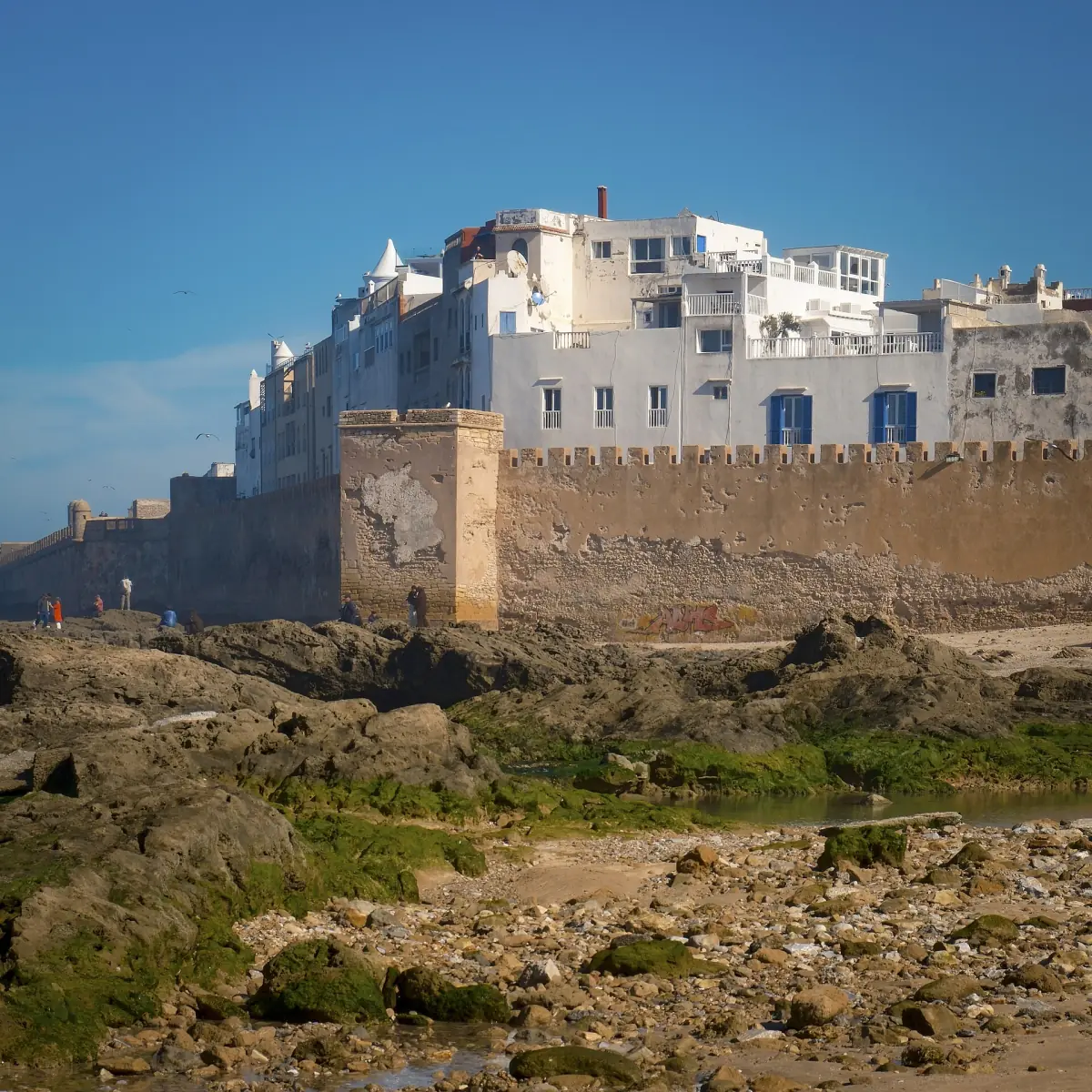
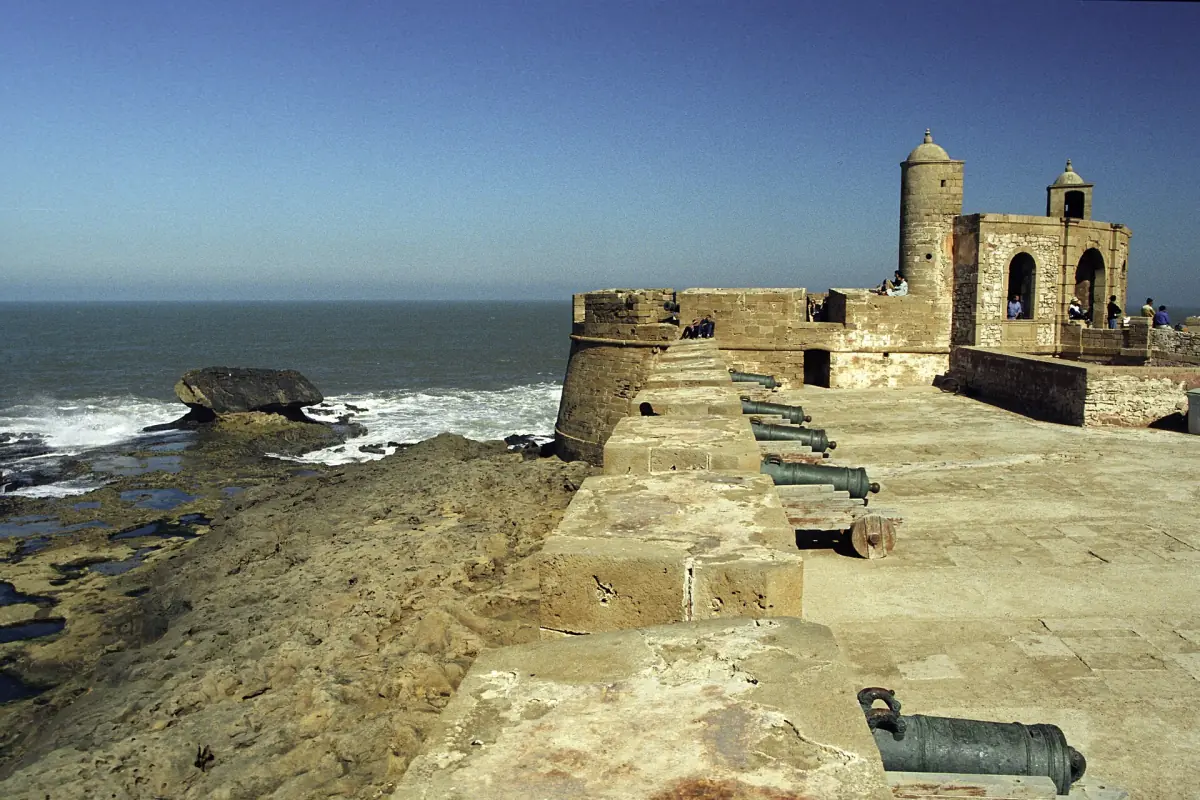
The Skala de la Kasbah and the ramparts
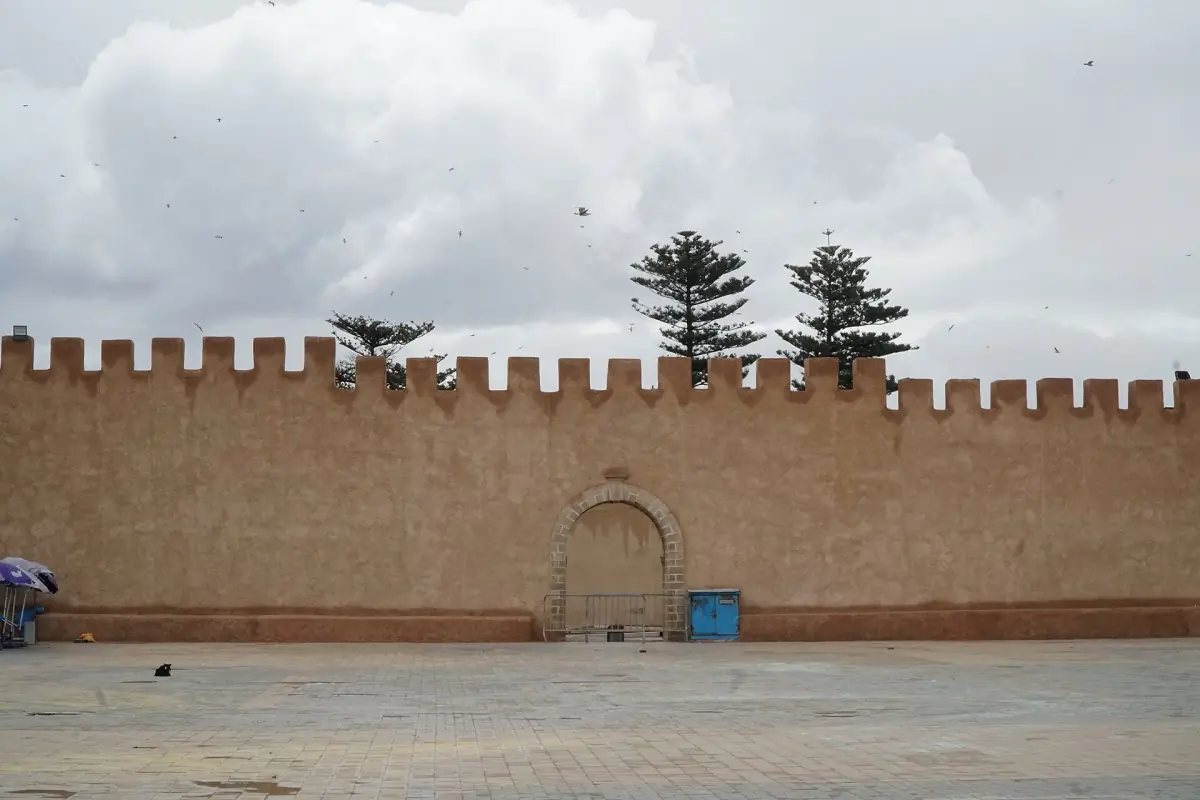
The bastion sits at the north-western tip of the medina and is a defense platform with cannons. Inside are former rooms for weapons and ammunition, and below it are the workshops of inlay craftsmen. The local portal dates it to 1765 and lists free access. It gives no reliable separate opening hours, so ask on site if you plan around a time of day.
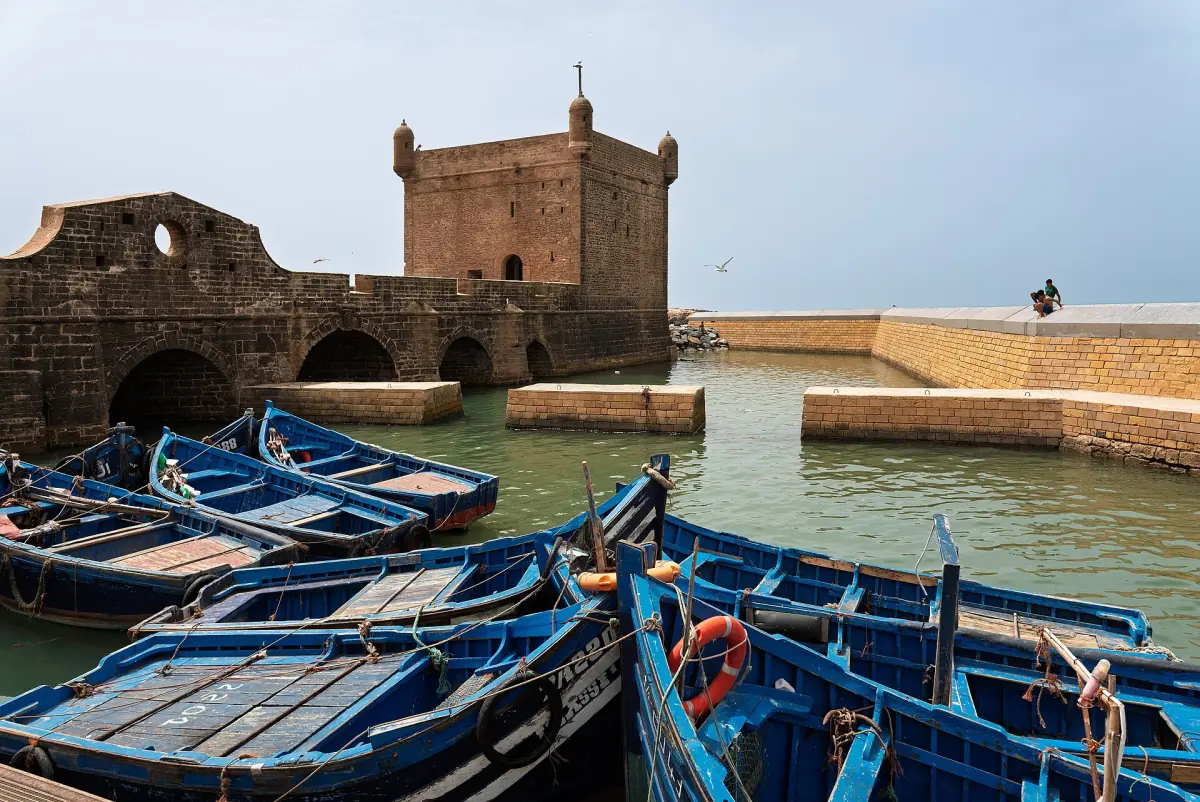
Guidebooks often call this bastion the Skala de la Ville. The official local listing calls it the Sqala de la Kasbah. Keep it apart from the Skala du Port at the harbor, which is a separate monument with a ticket. You need no ticket to see the town walls from the lanes.
Our picks: guided tours
Two ways to see Essaouira with a local guide.
Hand-picked tours, booked through GetYourGuide. Prices are indicative starting prices in euros (as of October 2026). Tap a tour for live availability and the current price in your currency.
Full-day guided tour with a local
Hotel pickup and a guide. Entrance fees, food and drinks and tips are extra.
Check availability →Port, ramparts and fish market walk
Three hours with a licensed local guide and some free time. Transport and tips are not included.
Check availability →Medina tours and guided walks
Guided walks through the medina, the ramparts and the harbor, plus cooking classes and day trips from Essaouira.
Gates, lanes and souks
How the town is laid out and how to move through it.
Bab Doukkala
One of the main gates, also called Bab Safi or Bab Sidi Bouzerktoune. The local portal dates it to the 18th century, under Sultan Sidi Mohamed Ben Abdallah, and lists free access. Do not mix it up with the grand taxi meeting point of the same name in Marrakech.
The lanes
The medina is a pedestrian area. Cars stay outside, and parking near the medina can be scarce in high season. If you arrive with luggage, ask your accommodation how to get there on foot from the nearest gate or parking space.
Where to stay →Souks and trade
Trade is the reason the town exists. UNESCO calls it a multicultural trading center. Shops and stalls line the lanes, and a historic photograph of the Souk el Jdid shows how long people have bought and sold here. Take your time and compare before you buy.
Areas of the medina
The local portal separates the districts of Chbanat, Kasbah and Mellah when it describes places to stay. Each lies at a different distance from the walls, the harbor and the beach.
The Mellah and Bayt Dakira
The Mellah is the historic Jewish quarter. The local portal places Jewish settlement in 1764, and the quarter was laid out on the order of Sultan Moulay Slimane in 1807. Today it is not a fully Jewish neighborhood. Treat it as a place where people live and work. Ask before you photograph people.
Bayt Dakira is associated with the synagogue of Simon Attias. The local portal places it in the old kasbah, on Rue Ziry Ibn Atiyah, and states that visitors have access. It keeps the memory of Jewish life and of the relations between Judaism and Islam. A hotel website describes the Slat Attia synagogue and a research center named after Célia Haïm Zafrani. Check the current hours and entry fee before you go.
A simple walking plan
One way to connect the main sights, in the order of the map.
Start at Bab Doukkala
Enter through the gate and walk into the lanes toward the center.
Add the Mellah and Bayt Dakira
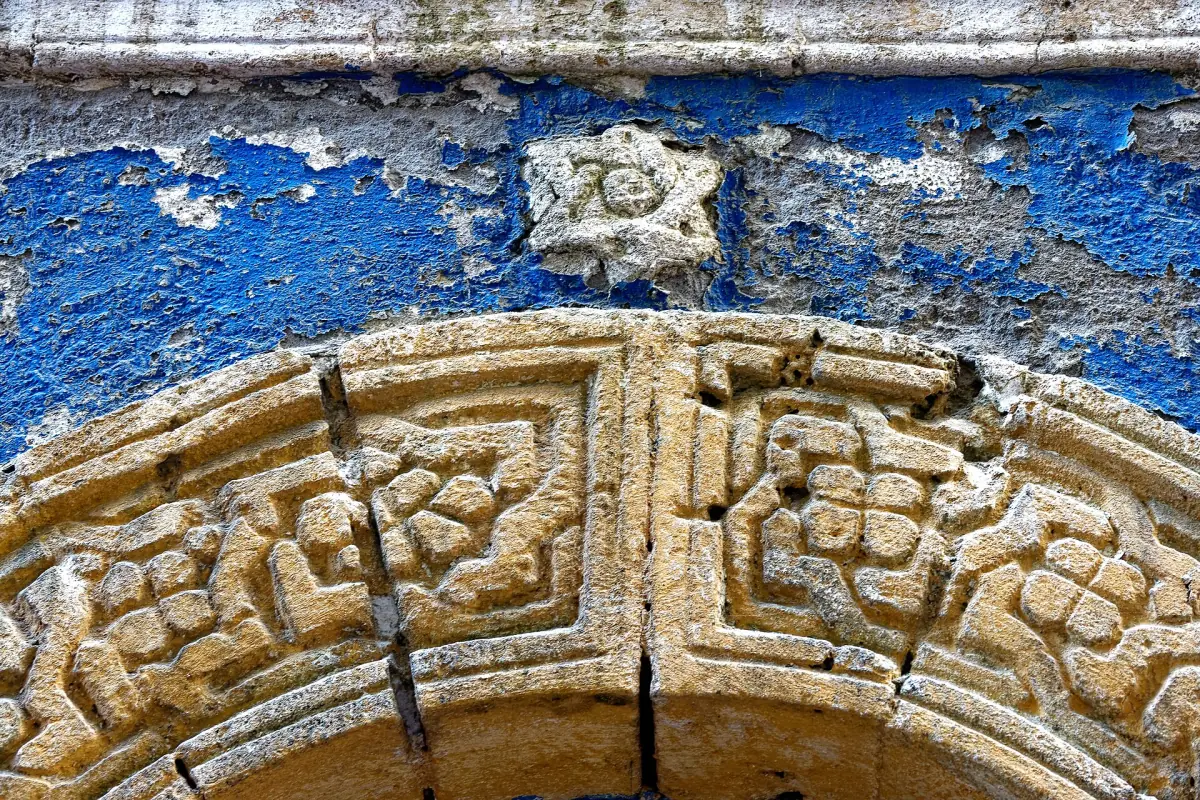
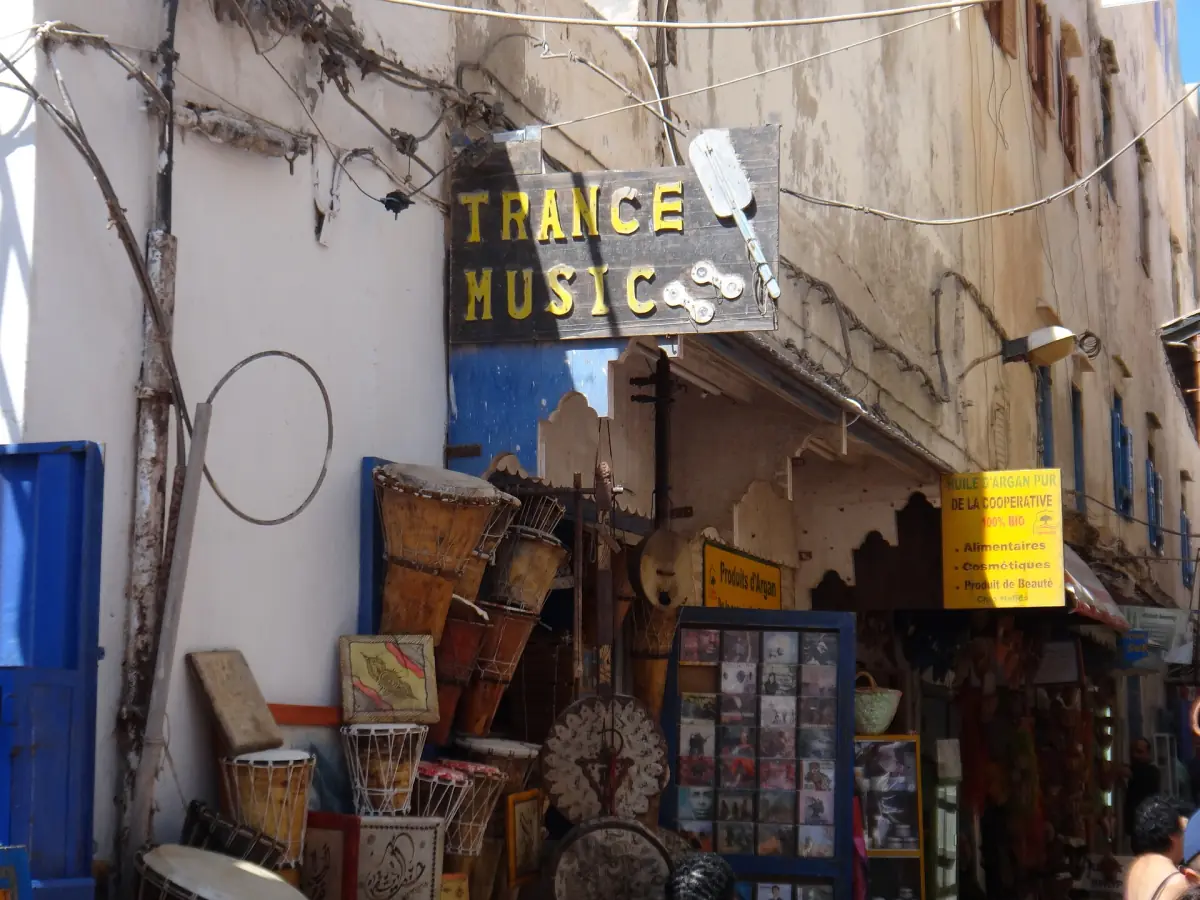
Plan time for the Jewish heritage sites. The Mellah has blue doors, carved arches and shops, including a music shop with drums.
Climb the Skala de la Kasbah
Walk to the north-western tip for the cannons over the Atlantic.
Finish at the port
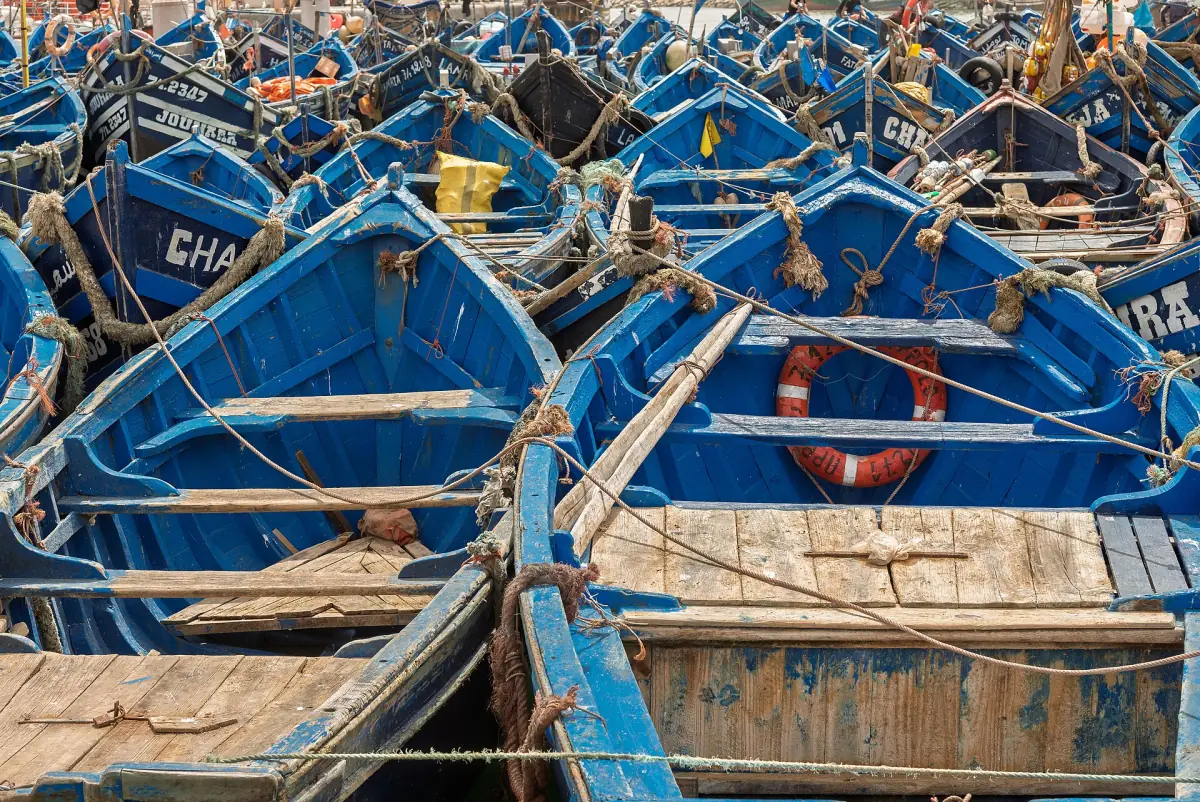
Walk down to the harbor, watch the boats and decide whether to pay for the Skala du Port. Read more on the port page.
More on Essaouira
Pages that go with the medina.
Essaouira medina: frequently asked questions
Is the medina of Essaouira a UNESCO site?
Yes. It has been on the World Heritage List since 2001 under criteria (ii) and (iv). The listing covers the historic ensemble, not individual shops, riads or guides.
Do I pay to enter the medina?
No. The lanes are free, and the Skala de la Kasbah and Bab Doukkala are listed with free access. The Skala du Port at the harbor is ticketed, with 60 MAD for foreign adults in 2026.
Can I drive into the medina?
No. It is a pedestrian area. Parking at the beach is paid, and spaces near the medina can be scarce in high season. Ask your accommodation about parking before you arrive.
Is the Skala de la Ville the same as the Skala du Port?
No. Guidebooks use Skala de la Ville for the bastion at the north-western tip, which the official local listing calls the Sqala de la Kasbah. The Skala du Port is a separate monument at the harbor.
Is Bayt Dakira inside the Mellah?
The local portal places the synagogue of Simon Attias, with which Bayt Dakira is associated, in the old kasbah on Rue Ziry Ibn Atiyah. Ask for directions at your accommodation rather than assuming it lies in the Mellah.